
Familial Dilated Cardiomyopathy (DCM) PDF version
What is dilated cardiomyopathy (DCM)?
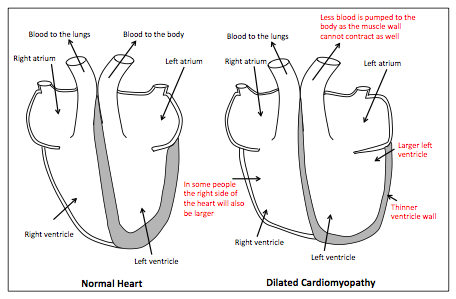
Dilated cardiomyopathy is a type of heart muscle disease affecting the left ventricle (the main pumping chamber of the heart). The left ventricle enlarges (dilates) and this affects the ability of the heart to effectively pump blood (shown below). DCM can affect both adults and children. The symptoms range from none to mild to severe. DCM can also lead to heart failure. When the pumping function of the heart is very poor it can lead to symptoms such as shortness of breath, swelling of the ankles and legs, and fatigue. In some cases, DCM may affect the electrical system of the heart, leading to rhythm problems, and this may require implantation of a pacemaker/defibrillator. Rarely, DCM can cause sudden death.
What causes dilated cardiomyopathy?
There are numerous conditions that lead to a DCM. These include prolonged alcohol or drug use, viruses and thyroid disease. However in up to 50% of cases no cause can be identified. Familial (inherited) DCM accounts for approximately 20-50% of these cases and is caused by an inherited gene fault. In these cases clinical investigation of first-degree family members (parents, siblings, children) is very important. Early detection of familial DCM is important so that disease progression can be carefully monitored and treated to hopefully prevent future complications.
Genes and familial dilated cardiomyopathy
Our body is made up of millions of cells, including brain cells, liver cells and heart cells. Each cell contains 46 chromosomes; chromosomes contain genetic information that guides our body’s growth and development. These 46 chromosomes are grouped into 23 pairs, one of each pair coming from mum and the other from dad. One of these pairs is known as the sex chromosomes, and these decide whether we are male or female.
If you imagine a chromosome as being like a ball of wool, you could stretch it out into one long strand, which is known as the DNA. Along the length of DNA there are regions called genes. As there are two copies of every chromosome, there are also two copies of every gene (one inherited from each parent). Genes act as recipes to make certain things in the body, and each recipe is unique based on the order of units it is made up of. If there is a mistake in one of these genes (a mix-up in the order of these units) it may lead to the development of disease. This mistake is known as a gene fault.

In the case of familial DCM, we know a single fault in any one of 30 genes can cause the disease.
How is familial dilated cardiomyopathy inherited?
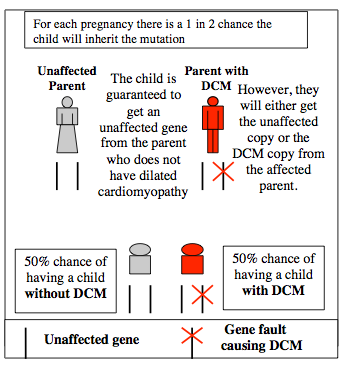
In most cases, familial DCM is known as an autosomal dominant condition, whereby the gene with the fault “dominates” over the unaffected (normal) gene, causing the disease. This means that an affected person has inherited one gene fault causing familial DCM from one parent, and one unaffected gene from the other parent. Likewise, if a person who carries a DCM gene fault has a child, then the chance that the child will be affected is 50%, or 1 in 2. This is because they have a 1 in 2 chance of inheriting the gene fault causing DCM from the parent with the condition. This is illustrated in the diagram.
In some cases familial DCM can be inherited as an X-linked trait. This means that one gender may be more prone to developing disease.
Rarely, a person may have a gene fault that has not been inherited from their parents. Instead, the fault has arisen some time after conception. This means that their brothers and sisters are not likely to develop the disease, however the gene fault can still be passed down to any children of the affected person.
What is genetic testing?
Genetic testing involves looking for the fault in the genes known to cause familial DCM. It is a long and difficult task that has been likened to looking for a single spelling mistake in an encyclopaedia set. This is because most families have their own unique gene fault that may exist in one of the genes we have already identified, or even in a gene not yet discovered to be involved in this condition. To date over 30 genes have been found to cause DCM, however these genes account for a small proportion of disease. Genetic testing in DCM is expensive and at the moment there is only a small chance (up to 20%) of finding the gene fault causing disease. Genetic testing for familial DCM is therefore not routinely offered at present, however this may change in the near future as the technology for carrying out the tests improves. In some cases, particularly in families where there is also a history of conduction disease, then genetic testing is expected to be more informative.
If a gene fault is identified in the affected person we can then offer a gene test to other family members. This test takes 4-6 weeks for a result, and will quickly determine if the family member has inherited the DCM copy or the unaffected copy of the gene. This is called predictive genetic testing, and allows a person to know if they are likely to develop the condition even before symptoms are present. If they do not carry the gene fault then we can say that they will not develop DCM, and future ECG’s and echocardiograms are not necessary. If they are shown to have the DCM gene fault then there is a good chance they will develop the condition, and close follow-up would be recommended.
Will a diagnosis of familial dilated cardiomyopathy change my lifestyle?
There are certain Do’s and Don’ts that we advise people about when they are diagnosed with this condition. These guidelines help to reduce the risk of the most devastating outcome – sudden cardiac death.
Do’s and Don’ts:
- Avoid competitive sports. Competitive sports include those that require significant exertion, for example: Touch football, Basketball, Netball, Squash, running and even social games that you may not think are too strenuous. The international guidelines recommend people avoid competitive sports because high level exercise can trigger rhythm problems leading to sudden death.
- Regular light exercise. Although there is a lot of emphasis on avoiding sport, it is still important to maintain a healthy lifestyle. Regular light exercise such as walking is not only good for your heart, but also good for your general health.
- Regular check-ups with your cardiologist. It is important to monitor the progression of the disease, and you should also report any new symptoms.
- Surgical procedures. You should inform the attending doctor of your condition before any surgical/dental procedures.
- Consult with your GP or cardiologist before taking any new medications. It is important to talk to your doctor before taking any new medications, including alternative medications obtained from the ‘healing arts’ e.g. herbal remedies.
- Avoid excess consumption of alcohol. Alcohol can have adverse effects on the body and can worsen the symptoms of DCM.
- Encourage relatives to be screened. As mentioned, siblings and children of an affected person have a 1 in 2 (50%) chance of being affected. Screening of relatives involves them seeing a cardiologist where they will have a physical examination, an ECG and an echocardiogram (ultrasound of the heart). The relative must inform the doctor that there is a family history of familial DCM to ensure no signs are missed. The Genetic Heart Disease Clinic (Ph: 02 9517 2011), held at the Sydney Heart Centre at Royal Prince Alfred Hospital, is available for the screening of relatives.
If you would like to know about how genetic test results could affect your application for Life Insurance, please visit www.ifsa.com.au for current guidelines (fact sheet: Life Insurance and Genetic Testing In Australia, March 2002) or phone (02) 9299 3022
The Agnes Ginges Centre for Molecular Cardiology has a large research program focusing on inherited heart disease. If you would like more information on this research program or would like to know more about centres offering commercial genetic testing, please contact Ms Laura Yeates Cardiovascular Genetics Coordinator (02 9565 6187).
Other helpful websites
www.heartregistry.org.au Australian Genetic Heart Disease Registry
www.cmaa.org.au The Cardiomyopathy Association of Australia
www.heartfoundation.org.au National Heart Foundation of Australia
www.hearts4heart.net.au Hearts4Heart support group for young people with heart disease
Contacts
If you have any further questions, there are many people you can contact. These include:
Ms Laura Yeates
Professor Christopher Semsarian
The Agnes Ginges Centre for Molecular Cardiology, Centenary Institute, Locked Bag No. 6 Newtown NSW 2042
Phone: (02) 9565 6187 Fax: (02) 9565 6217
Email Laura Yeates
Email Professor Chris Semsarian
Twitter @CSHeartResearch
Facebook Heart Registry
Your local GP or cardiologist
Cardiomyopathy Association of Australia (CMAA)
www.cmaa.org.au or 1300 552 622




